Sunday, November 28, 2010

The App Mentality

Right now, when talking about tablet computers and their functionality, we usually discuss apps and how they expand the platform. Apple and Android devices alike access massive app stores that offer third party developers chances to offer dozens more tools that don’t come with the device naturally. In fact, for some manufacturers, the allure of the Android App store has made (or broken) their devices.

But, for those interested in more powerful applications or for specific enterprise functionality, Apps don’t always get the job done, at least not right out of the box. The iPad for example has been available for the better part of 8 months and is still gaining functions that its original users have long wanted, and almost all of them rely one or more third party apps.

Android tablets are now in the same place as Apple when its device was first launched. There are more than a hundred thousand apps available on the Android Marketplace, but they are almost all exclusively developed for smart phones. The resolution is lower and interfaces are designed for smaller screens, but with time that will change as the Android Marketplace share for tablet PCs continues to grow.

I’m largely restating the obvious though. What exactly should apps provide that the OS does not and does every passing week make it that much harder for anyone not named Apple or Google to provide a viable operating system for a tablet?

To start with, it depends on your perspective on touch screen computing. For many users, tablet PCs should come with native touch applications. And because those apps can be single access tools with low development costs, it’s not surprising that App stores are thriving. But, that doesn’t mean the Windows model won’t continue to work.

Personally, I wouldn’t be surprised to see more robust advancements to the Windows operating system for touch computing, especially as Windows 8 grows in development between now and 2012. But, even with the current iteration of Windows 7 on a tablet (which I think works great), combined with third party tools like Thinix, you still need applications.

Office is good, as are a number of standard third party tools for Windows, but for a device to be truly effective as a tablet, it needs to be optimized for touch – not the on-the-fly OS tools used to interpret touch input as standard input. Devices like the TegaV2 are attractive for this very reason – the opportunity for dual OS operation (Android and Windows 7) gives owners both options.

If Apple didn’t have such an exclusionary policy about how apps are developed and approved in the App store, I think this conversion would be a lot more interesting. As it is, however, developers are essentially forced to develop iPad versions of their software first, then explore Android alternatives before looking into third party app stores. How will other devices like RIM’s PlayBook or rumoured Nokia devices compete? It remains to be seen, but the App model isn’t going anywhere any time soon.

Saturday, November 27, 2010

Change Android Tablet PC flytouch 2 1GHZ GPS Camera URI Address

Sorry the Android Tablet PC flytouch 2 1GHZ GPS Camera http address need change  to http://www.itabletpcshop.com/Android-Tablet-PC-Flytouch-2-Google-TabletPC-Gravity-Sensor-GPS

about the error very sorry

Processor: Infortm X220 ARM11 1Ghz
Operating System: Google Android 2.1
RAM: 256MB DDR2
ROM: 2GB (Upgradable to 8-32GB)
External Memory: Supports up to 32GB TF Cards
Display: 1024×600 Resolution, 10”LCD Screen
Buttons: Power On/off, Front-side Back Button,Home and Menu buttons on the side
Input: Resistive touch screen, Virtual keyboard
G-sensor: 3 sides G-sensor
camera: 3.1M pixtel
Audio Input: Built-in Microphone
Audio Output: 3.5mm Earphone Jack, Built-in Speaker
Extension Devices: mini usb
GPS XN203

Power Adapter: 9V 1.5A
Battery: 3800mah

gravity sensor: 3 direction

Support 3G :EVDO E1916

ANDROID TABLET PC FLYTOUCH 2 1GHZ GPS CAMERA

Processor: Infortm X220 ARM11 1Ghz
Operating System: Google Android 2.1
RAM: 256MB DDR2
ROM: 2GB (Upgradable to 8-32GB)
External Memory: Supports up to 32GB TF Cards
Display: 1024×600 Resolution, 10”LCD Screen
Buttons: Power On/off, Front-side Back Button,Home and Menu buttons on the side
Input: Resistive touch screen, Virtual keyboard
G-sensor: 3 sides G-sensor
camera: 3.1M pixtel
Audio Input: Built-in Microphone
Audio Output: 3.5mm Earphone Jack, Built-in Speaker
Extension Devices: mini usb
GPS XN203

Power Adapter: 9V 1.5A
Battery: 3800mah

gravity sensor: 3 direction

Support 3G :EVDO E1916

info:http://www.itabletpcshop.com/Android-Tablet-PC-Flytouch-2-Google-TabletPC-Gravity-Sensor-GPS
Christmas sales started! !
Christmas like you want to have a Tablet PC ?
ITabletPCshop.com start the purchase of tablet PCs to free send packets and keypad


Thursday, November 25, 2010

Christmas you want have a Tablet PC ?

Christmas you want have a Tablet PC ?
ITabletPCshop.com start the purchase of tablet  PCs to free shipping and free  packets /keypad
 
Android Tablet PC


Wednesday, November 24, 2010

Windows 7 Tablet PC VS iPad

What Was NEC Thinking?


It’s not every week that I have two tablets I can point at and say “that’s how not to do it” but after Monday’s post about the Toshiba Folio 100, I have another device I want to point out that just plain gets it wrong.

And while Toshiba at least had good intentions with their Folio design, NEC has completely missed the boat when it comes to their newest tablet entry – the LifeTouch. The device, which on paper doesn’t sound bad with Android, 3G, USB, SD Card reader, and 3 megapixel camera, all running on an ARM Cortex, is just a bit clunky if you ask me.

Here’s the problem. As you can see from the image above, not only does the LifeTouch eschew the increasingly standard silvers and blacks of modern tablets for a bright, glossy white, it is loaded with clunky buttons, a whole lot of extra material and a 7 inch touch screen that looks smaller than it ought to.

Just after receiving news that in the US alone, Samsung has sold 600,000 Galaxy Tabs, we now know that there is a huge market for Android tablets, but devices like this aren’t designed to capture that audience.

To be fair, it’s not like no other devices look like the LifeTouch. Only three years ago, many devices still sported buttons and had thick, heavy bodies for carrying. The difference is that back then touch screens simply lacked the responsiveness and flexibility they have today. And Windows on tablets was still being done with modified XP installations – it wasn’t nearly optimized for touch screen yet, so you needed buttons.

But, today’s devices are sleeker and more efficient than ever. Touch screen has moved forward at rapid speed and Windows is now a hot commodity for enterprise tablets (which is the market the LifeTouch is aiming for). And, this isn’t even a Windows device. It’s Android which means it was built for touch screens – definitely no reason for buttons.

In the end it all comes back to one question – what exactly was NEC thinking? Not only will this device launch at the tail end of the biggest year for tablet computers ever to date, but it will be immediately hobbled by questionable design, an older version of Android (2.1), and no clear market.

The last two years has been an amazing time for anyone who follows tablet computing. The speed with which the market has moved forward still astounds me and the new technology and sleekness of some devices being announced is downright impressive, but every now and then someone gets it wrong. It’s not to say a future device from NEC won’t adopt a sleeker design and a more intuitive layout, but for now we’re getting one more lesson in how not to build a tablet in 2010.

Monday, November 22, 2010

Windows 7 Tablet PC Today!!! Win7 will have to all

WINDOWS 7 TABLET PC MULTI TOUCH


This tablet PC is perfect for your mobile computing lifestyle, including browsing the Web,

reading and sending e-mail, enjoying photos, watching videos, listening to music, 

playing games, and much more. It features a brilliant 10.1- inch,

LED-backlit display with IPS technology that delivers crisp,

clear images and consistent color and a highly precise,

capacitive Multi-Touch display.That's Amazingly accurate and responsive - whether

you're scrolling Web pages or playing games.

Highlights
This tablet PC is equipped with Microsoft Windows 7 OS, 
Multi Touch Screen 
CPU: Intel ATOM Processor N455(1.66GHz)
Hand Disk : 160G SATA 
Audio: Azalia Codec support 2.1 channel output
Graphics Card: UMA of Integrated Graphics 200MHz/DirectX9, Shared system memory
Camera: 1.3 MP
Wifi: 802.11 a/b/g and Faster dual-channel MIMO 802.11N
which comes with a variety of language choices:
English, French, Deutsch, Dutch, Czech, Spanish, Polish, Italian, Russian,
Chinese, Japanese,Korean, etc.

Did Pricing Fail Toshiba or Did Toshiba Fail the Public?


Right now it seems like every manufacturer on the planet is churning out a tablet PC to compete with the iPad. All those new tablets are sleek, stylish and generally considered quite popular with most consumers – especially when they are in the realm of affordability.

Yet, there is one company that is already finding itself in the dog house with customers over an inferior piece of tech. Now, there are a lot of problem tablets out there, many of them derided for being cheap and cashing in on the tablet craze. But, for the most part, those poorly made tablets are inexpensive – they are bad because they are cheaply made.

However, Toshiba’s Folio 100 has no such excuses. The device, which retails for €399 for most models (and as much as €529 for 3G models) and was released in Europe just two weeks ago, has already been pulled from at least one major retailer’s shelves (PC World). 

At first, there was some speculation that price might be an issue. After all, screenshots had surfaced of the Folio 100 with a £999.99 price tag. That was an internal blunder by the retailer, but the device itself had enough problems to push a removal anyways.

What Went Wrong?

So, what went wrong with the Toshiba tablet and how could a company always at the forefront of mobile technology and tablets in particular make such a pronounced blunder? To start with, they rushed a product to market.

In their hurry to compete with Apple and other upstarts like Samsung, Toshiba created a product with inferior integration of Android, a mushy LCD with poor viewing angles and low pixel density, and a plastic case. The device simply doesn’t feel or look like the highly touted, sleekly designed tablets that have been making other companies so successful.

Since the Folio doesn’t have access to the Android Marketplace yet (a big sticking point for many rushed Android tablets) and because the built-in Toshiba Market Place app is so buggy, expansion of basic usability on the tablet is very limited – making it even harder to recommend the device.

This is a problem I think we’re going to see a lot more of. There are hundreds of companies out there frantically rushing to get a device on the market – not wanting to fall behind a burgeoning industry that will revolutionize computing like nothing since the laptop was developed. And because there are other devices already providing optimal user experience, companies that rush something out of the factory will not be rewarded, especially if the price is so high that it doesn’t allow them to forgive technical flaws.

Toshiba probably learned a valuable lesson here, one that cost them dearly. One hopes their next attempt at a tablet does more to highlight their long history of quality and durability in their devices, and that other companies currently rushing their own offerings out the door will learn as well – not all tablets will be successful. 

Saturday, November 20, 2010

Thursday, November 18, 2010

The Power of Embedded 3G

These days, whenever a new device is announced, the first thing I find myself doing is sifting through the small print to learn whether it will be WiFi only or support both WiFi and 3G connectivity. For sure, 3G seems to have an impact on how the public both perceives and discusses the usefulness of that device, so what does the future look like for this often times overlooked feature?

To start with, it’s obviously a cost issue. Adding embedded 3G to any device costs more money. With the iPad, the price jumps by over $100 and for some devices it goes up even more. However, having a 3G embedded device also creates a natural partnership between mobile carriers and tablets, allowing users to signup for a two year service plan and receive subsidized pricing on the tablet – as is the case with the Samsung Galaxy Tab.

What Does 3G Bring to the Table?

Think of it this way – a WiFi only device is no better than a laptop. Yes, you can carry it with you more comfortably, but you’re still stuck looking for WiFi signals wherever you go. That means paying extra fees in airports and hotels, hunting for hotspots when out of town, and having to simultaneously use the phone for any on-the-go communications.

On the other hand 3G allows you to greatly increase productivity. Just having a 3G transceiver embedded in a tablet, you’re immediately more likely to carry your tablet with you everywhere you go. It becomes more like a phone in its 24/7 mobility than a laptop which you must sit down to use in set areas – there’s a big difference.  

Beyond simple access, imagine being able to quickly and easily jump onto the Internet and check a video when on the train or look up an important fact or figure in your email. Imagine being able to work on a file and send it while in a cab. These are things you cannot do with WiFi.

Going Beyond Simple Access

Beyond simple Internet access, there are a lot of manufacturers out there pushing the implementation of voice features on devices with embedded 3G. The Galaxy Tab is again a great example. While not available in the US, the European models of the Tab sport voice that can be paired up with Bluetooth to use your Tab like a giant phone.

On one hand it helps the mobile carriers to sell contracts, but one has to wonder if it is a bit of a distraction. You already have a mobile phone most likely – do you need a voice connection to make your tablet useful? I don’t think it’s necessary, but at the same time the fact that it’s possible is yet one more point in favour of 3G connectivity.

Right now, we’re in the transition between 3G and a series of faster, more direct mobile technologies like WiMax and other 4G technologies. Devices that are willing to explore mobile access to the Internet beyond WiFi are going to not only be more useful, but eventually be more desirable (regardless of cost). 

Santa Claus loves Tablet PC

Christmas comes again soon, buy a low price and good quality of thought have protected android tablet PC?

2

You want information about our company?

OUR GUARANTEE More about us

Monday, November 15, 2010

Finding Room in the Tech Market for Tablets

This morning as I was reading through a handful of my favourite blogs, I came across a number of new stories discussing how the tablet market is cutting into other long established markets. We’ve already discussed a few times the claim by some executives that the iPad is cutting severely into netbook sales, but this is not the only cannibalization in the technology race according to more than a couple analysts.

What interests me most about the growing argument over consumer focus and the effect it has on existing industries is that this is not a rare event. Whenever new technology becomes available, there is inevitably a shift in consumer spending. Most people don’t need a netbook and a tablet. They don’t need cable TV, Netflix, and a Hulu powered device. That’s not to say that some won’t have those devices, but for the most part, many people will stick with what works best in their day to day life.

It’s happened before. New technologies frequently supplant old ones. If you visit your local electronics store, you’ll surely find far more laptop computers on display than desktops. That’s not to say that desktops do not sell, but laptops are used in almost every facet of society – from education to enterprise and beyond while desktops are generally used at home and in the office. When laptops became more powerful and affordable they cut into that market sharply.

The same is now happening with the iPad and soon other devices of the same style and form. These devices are new and consumers do not yet know how they will use them, but we can be sure that many daily activities will be moved to the mobile space, simply because it is more convenient. Already, mobile smartphones are becoming a replacement for many tools such as phone books, maps, and portable gaming devices. So too will tablets gouge out their own space.

There are a few things that I find especially interesting in this new technology push, however. For sure, the demise of netbooks has been prematurely proclaimed. Just look at the sharp push of Macbook Air sales since the newest model was announced or Dell’s soon to be released Inspiron Duo – a hybrid of the tablet/netbook aesthetics. If a netbook can offer superior performance and a sleek design to rival a tablet, it will still sell.

But, on the other side of things, there are more technologies than just computing that will take a hit thanks to tablets. What about books? Or toys for children who are becoming increasingly tech savvy at very young ages? What about entertainment systems for the car? Who will need to spend thousands of dollars for a backseat DVD system when a single tablet with a Disney movie downloaded to it could easily do the same job.

This is an exciting time. All around us, people are innovating and developing new ways for mobile technology to take over certain tasks we perform using existing tools. That shift is only going to intensify as this technology matures – and while some people will be very nervous, I will be watching closely because there are so many avenues yet to be explored. It might harm one industry, but it will definitely provide value to the consumers driving these changes.

Sunday, November 14, 2010

android tablet pc the market

With your google account, you can download a huge variety of free and paid software from the Android Market.


easy-to-use and the latest in personal computing trends.

This is perfect for those who want to work on projects or e-mails while they’re out and about,

but don’t want to carry around something as bulky as a laptop.

the android tablet pc M7001


cgov1287742089750

Thursday, November 11, 2010

How Big Do People Really Want their Tablet Devices?


With so many new tablets being announced seemingly every week, it got me thinking – what are the newcomers doing to stand out from the industry leaders (i.e. the iPad)? There are a lot of engineering decisions that help the competitors in my books – open OS platforms are instantly more flexible while expansion slots for memory cards are a big plus in my book.

But, one of the many variations I’m seeing that a lot of companies are betting on is the screen size – there are quite a few devices on the market that are offering a 7 inch display rather than a 10 inch – effectively cutting down on the screen real estate available for computing.

While, this might seem like a cost cutting measure, one look at sleek new devices like the Galaxy Tab or the Viewsonic Viewpad shows you that they might have something else to offer entirely. Specifically, a smaller tablet is more mobile, and that is the point, after all.

What Apple did with the iPad is blow their iPhone display and OS up to the point that it could be used interchangeably for media consumption and some basic typing. Let’s face it – no one is going to type a novel on an iPad. But, at the same time, the device is a little bulky. It’s too heavy to carry in one hand and takes up a decent amount of space in a bag – even if it is far less than that of a laptop.

So, a 7 inch device does make sense if you want something that could theoretically fit into a large jacket pocket or go into the front flap of a backpack or messenger bag. Smaller devices can also be held easily in one hand, something that the 10 inch devices don’t allow.

Does the Size Matter?

In the age of hyper analysis of every new tablet announced, I’m wondering what role the size will play in the expanding market. Obviously the iPad is number one and will stay there for some time to come, but do people really want a 10 inch tablet, or is it that the most desirable device on the market (due to marketing and the ever-present Apple “hipness” factor) just happens to be 10 inches?

It really depends on who you’re talking to. To start with, cost plays a role. Smaller tablets can be sold for lower prices without necessarily sacrificing horsepower (something that severely short changes users – see my post on the $200 Gentouch tablet). Another thing that might come into play here is what the tablet will be used for. If someone merely wants a device for watching movies, playing games and checking email, do they need a 7 inch display? For me, the larger display devices are perfect for enterprise applications through Windows 7 but are not necessary for simple entertainment consumption.

As people start to ask whether Apple will introduce a smaller screen version of their uber-selling iPad and others wonder if companies are spreading themselves too thin with multiple sizes of their own first-time entries, it bears considering what role the size of these devises will ultimately play in the market. 

the latest products 8”inch Android Tablet PC

Research and hard work the team announced that tomorrow, on-line a 8 "inch Android Tablet pc

image

More pictures, please wait for tomorrow's release Hope you like our products and enjoy shopping at www.itabletpcshop.com

The SPEC :


Dimension: 160*213*9mm
Net Weight: 0.47kg
Screen: 8.0 inch TFT touch screen, 4:3, 800*600
CPU: Telechip 8902, ARM11 800MHZ
RAM: 256MB
Storage: Build-in 1GB-16GB, TF card extendable 1GB-16GB
PC Interface: MINI USB 2.0*2
System: Android 2.1, more than 100,000 software are available in the internet
Internet Access: Wifi IEEE 802.11b/g 11Mbps to 54Mbps,
Optional external 3G module dongle CDMA2000 1xEV-DO & WCDMA.
Software: Google browser, Google map, Gmail TM, Skype, MSN,etc.
Camera: N/A
Games: Download from internet
E-book: TXT, PDF, CHM, HTML, PDB, UMD
Multimedia Playing: Video: support 1280*720P, RM,RMVB,AVI(H.264/H.263),MOV,WMV,MP4,ASF,3GP,TS,etc.
Audio: support MP3, WMA, WAV, APE, FLAC, AAC, OGG,etc,
Photo Borwsing: JPG, BMP, PNG,TIFF
Battery: Lithium 3700mAh

Tuesday, November 9, 2010

we will soon be added to our new Android Tablet PC android 2.2 OS

The future, we will soon be added to our new Android Tablet PC android 2.2 OS to drive a better user experience and hardware design

If you have a better idea to ITabletPCshop.com team feedback, we will have part of the android Tablet PC gifts sent, Hope you like our products and enjoy shopping at www.itabletpcshop.com

double


Electroid_2

Monday, November 8, 2010

Who is the Ideal Audience for a Tablet?


When reading a number of blogs I enjoy this morning, I noticed a press release that was making the rounds. The release in question was for a new tablet designed explicitly for children from Isabella Products, who has partnered with children’s publisher Houghton Mifflin Harcourt.

For a while now, I’ve kept a keen eye on whether tablets will ever expand to provide children’s only options. It’s been downright fascinating in recent months to follow the development of touch technology and how it relates to children. Toys have been working with touch screens for some time now, including Nintendo’s DS platform – a portable video game handheld designed primarily for children (though not exclusively).

Plenty of other toys have made the attempt as well. Children are generally very tactile. They learn through touching and doing and tablets offer just that level of interactivity. But, as anyone out there with a little one of their own knows, children are also mildly destructive. Handing over your new Galaxy Tab or Droid 2 for them to play with is not exactly the safest or most affordable option.

But, they love the things. Recent stories in the New York Times have catalogued the addiction of some toddlers to iPhones and tablets while plenty of parents I know use the devices to substitute for a pacifier or favourite toy when in public. It works like a charm.

So, a child-oriented device like the Fable sounds like a wonderful idea. This particular device comes in three child friendly colors, allows photo sharing, gaming, drawing, and books your children already like to read.

And yet, after reading the small print, the Fable seems more like a toy than a true tablet for children. The device allows the download of new games and books, but only through the Vizitme.com portal – the Isabella based portal for applications and software they offer on various mobile devices.

On one hand, it allows parents to severely limit what their children have access to, but on the other hand, what if you want access to non-HMH published books or games produced for Android devices? The level of support needed by a device with a closed environment may not mean much to a child of 3 or 4, but what about when they get a little older? Will the device retain any value at that point? Let’s face it – children are incredibly tech savvy. They will know by the time they reach primary school that they are using a limiting piece of technology.

All that said, I’m one-hundred percent for devices designed specifically for children. Yes, some children are calm and careful enough to sit down with a Tab or iPad and use a colouring book application or read a Dr. Seuss book, but others would rather use it to hammer blocks into place. So, a sturdily designed, heavy duty tablet with plenty of parental controls and kid friendly interface is just what the doctor ordered. Now, we just need one that can scale with our children as they grow older – allowing them to use a device that challenges them as they become increasingly tech savvy. 

Sunday, November 7, 2010

Android Tablet PC TCC8902-4G sale only $195.99

ï¼´he Android Tablet PC TCC8902-4G sale only $195.99

This tablet PC is equipped with Google Android 2.1 OS, which comes with a variety of language choices: English, French, Deutsch, Dutch, Czech, Spanish, Polish, Italian, Russian, Chinese, Japanese,Korean, etc.

Android Tablet PC

Audio/Video:Support 1080P HDMI video,music,chat,picture

Other features: 4G micro SD ,

Support WIFI 802.11 b/g,Broadband connection,external 3G(EVDO/WCDMA), Bluetooth

about Android Tablet PC TCC8902 4G Details Android Tablet PC TCC8902-4G


Friday, November 5, 2010

How People Use Tablets Now and Soon


One of the number one factors that holds many people back from buying a tablet is the big question of why. They want to know what a tablet PC will offer that a netbook or laptop could not. And while I personally believe that a Tablet PC can offer all of what a netbook or laptop offer and more, I have been thinking lately about what specific features of a more traditional keyboard based machine users might miss in the conversion to a mobile touchscreen.

For example, the flexibility of the keyboard – touchscreen keyboards are hit or miss. Some work far better than others, but across the board, it depends on the screen and the software behind the screen. Devices like the TegaV2 use EyesBoard to provide a tremendous amount of flexibility in how they function, while other devices have their own proprietary keyboards that are regularly being updated.

Another big issue is touch screen input. Right now, a lot of software developers are still thinking in terms of how to provide input that is adapted from existing software. Business users think “Word and Excel are hard to use on a Tablet” largely because the interface is adapted for touch use, not build around it.

In time, I hope to see more native touch applications that rethink the most intuitive way to enter data. Where keyboard shortcuts and mouse input make the biggest difference in traditional apps, what about multi-gesture inputs or voice input for a tablet? These are the types of problems I think software developers will turn their attention to as tablets increasingly become a viable part of the computing market.

Right now, though, a lot of companies are bridging the gap with hardware solutions. Apple has their Keyboard Dock for the iPad and many devices come with styluses or outside attachments for more traditional input.

For a long time (before the iPad or Galaxy Tab came along), tablets were often hybrid devices, converting from touch screen to standard keyboard input. While most devices have strayed from that in favour of the sleek, attractive body of the iPad and Android devices, some companies are still eager to push the boundaries of convertible devices. The Inspiron Duo from Dell is a great example of a netbook/tablet hybrid that doesn’t result in excess bulk, though it remains to be seen how the device will function in real world circumstances (i.e. weight and profile).

Already, we are seeing processors, screen technology, games, and the future of not a few manufacturers building off the tablet trend. That makes it very interesting to see where we might be headed with the development of new software and even new hardware that makes a tablet PC more intuitive and downright easier to use.

I use a tablet every day for much of my computing; how long until it’s possible for even the most traditional users to follow suit?

Thursday, November 4, 2010

Android Tablet PC New products in the shelves in our stores

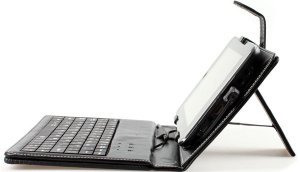
Today, the store added 2 new Android Tablet PC protection package (with keyboard) android Tablet PC users are not accustomed to the touch input has been replaced

The TABLET PC 7" BAGS&GADGETS AND KEYBOARD and  TABLET PC 10" INCH BAGS&GADGETS AND KEYBOARD 

Product Information:

Black leather high quality atmosphere, exquisite workmanship, fine stitching machine edge formation.

Crust leather holster on the back of the design using a stent may be admitted, so that during text input, you can watch the video about flat to 60 ° angle of upright, very friendly.

There are a leather magnet end support, close fit tightly after the give in the holster on. Open the holster I can see, the built-in physical keyboard MINI USB interface, using a wired, USB cable reserved for the length of the fuselage just received the Tablet PC's USB interface side.

20100906-C6737-06


Wednesday, November 3, 2010

android Tablet pc 2.2 OS

Google Android 2.2 is a shot in most of the developers of Tablet PC and pipelines in the table as Android 3.0 seems to be the ideal choice.
Many companies and Tablet PCs for new products in the fourth quarter of this year, and start Android 3.0 is expected to be released in October.
One of the big companies, the firm defender of the future release of Android Motorola. Rumors specifications are rare in this Droid with 512 MB RAM, an ARM processor and expandable microSD memory. They are striving to make their first foray into the tablet market around November.
Another company, by bypassing Android 2.0 Tablet PC to 2.2, the term of the ink. According to a recent blog entry by the Director General, said Rohan Shravan this to say: .. "There is great confusion about gingerbread in the meeting rooms here is 2.2 to difficult to explain to this operating system. And there are few products hit 3.0 soon. It is necessary to assess what it means. The window is very small 2.2 Device. "

These two companies are the first to publicly announce that Google move to 3.0 from 2.2, and many companies come out with new chips at the end of the year should consider what "standard for Android Societies LG, Asus, Toshiba and other companies .
Android 3.0 slates impact on the design phase of product development is very important. What is the main difference in Android 3.0? In essence, they concentrate on the shelves. Has a strict set of minimum requirements for equipment, such as: 1 GHz processor, 512 MB RAM and a bigger screen of 3.5 inches. Also gives a boost to the resolution, with a maximum of 1280 x 760th We have all heard the rumors come on the next generation of smartphones with a 2 GHz processor, so go the manufacturers of pills to a higher CPU.
Google Android will in the future development in October of this year if it can be divided into two branches. 3.0 for high-end luxury. Cheap, Android keep low-end mass market mobile phones 2.1/2.2
He whispers that 3.0 kill companies that make their own shells for their appliances. If you see the Dell Tablet series in Britain last month and see the leap from North America in August, which was filed with Android 1.6 and has its own interface. They promised updates to 2.2 in September. Other companies, customized graphical user interface for their devices: HTC Sense MOTOBLUR, among others.
One of the biggest drawbacks to improve the resistance against companies Google Android is complex, because massive deposits or the graphical user interface and its improvement is a difficult undertaking. With the elimination of the deposits, the Google Updater 3.0 is not on a standard operating system for smartphones, but above all Tablet PC.
With the advent of an operating system more uniform, so that more complex applications that an Android widgets, graphical user interface function and add the fact of the community, which would be viable on all platforms can use Android. This is a boon for independent developers who make a living in open applications and de facto standard application of a much larger market.
A number of companies that use their own shell usually have their own space applications market, or recommended to the website of the company's applications.They do this because many applications do not work on devices, because the custom of the shell. Android 3.0 is the need for companies to apo applications and allow more public forum ..

check the HOT ANDROID TABLET PC TCC8902 PROCESSOR 800MHZ ARM11 4G

Audio/Video:Support 1080P HDMI video,music,chat,picture
Other features: 4G micro SD ,
Support WIFI 802.11 b/g,Broadband connection,external 3G(EVDO/WCDMA), Bluetooth

Tuesday, November 2, 2010

How Big is the Tablet Market?


It’s November and that means we are getting closer to the end of the year, the time when companies scramble to follow through on promises, make new promises, and ensure that their devices are in the public conscious, even if they won’t be available before the holidays.

While a recent Bloomberg story cites data from Strategy Analytics showing that Apple now has a 95% stranglehold on the tablet market, there are dozens of companies scrambling to get in on it. Obviously, very few manufacturers had a product on the market when Apple released the iPad last April, so numbers like that are not surprising.

So the big question, for me at least, is where’s the cap? How much of a market really is there for products in the tablet space? Obviously Apple has a good head start, but smart companies with new products should be able to make headway if they can capture a solid chunk of market attention.

Take the Samsung Galaxy tab, which is making the rounds right now on many of the major tablet review sites. It’s finally hitting the market this month and has edged out the iPad in a number of areas, though no one is sure if it will have the kind of splash many people were hoping for. It remains to be seen how the device is marketed as to whether it will have an impact. (You can read reviews of the Galaxy Tab on Engadget, jkkmobile, Slashgear).

Then there are the newcomers. Every couple days it seems like another company announces their entry into the tablet market. In fact, I’ve mentioned at least a half dozen in the last month alone. Since my last blog post, Michael Dell announced more Dell tablets on the way next year, ViewSonic (the monitor producer) announced their ViewPad offering with a release date for Q1 of its 7 inch and 10 inch offerings (both with Dual Boot Windows 7/Android like the TegaV2), and Creative’s announcement of the Ziio tablet – being released in Europe very soon.

Each device has its merits (and downsides), but one really does begin to wonder just how many devices the market can support. No one seems able to agree on how big the tablet market will be over the next 2-5 years with some analysts seeing moderate growth and others seeing exponential growth on par with PCs in the mid-1990s.

One thing is for sure though – not every company is going to come out of this on top. Many manufacturers will see great success with only a fraction of the sales Apple records, but others will not be able to support adding a new wing to their tech offerings if they can’t really break into this market.

Very soon we will see which features, options, and aesthetics work best in the market, and as a result ,which devices thrive. 

Monday, November 1, 2010

iPhone table

Does anyone know this? This is a table with the iPhone to connect to the iPhone

66a4ae18g93d03c397518&690